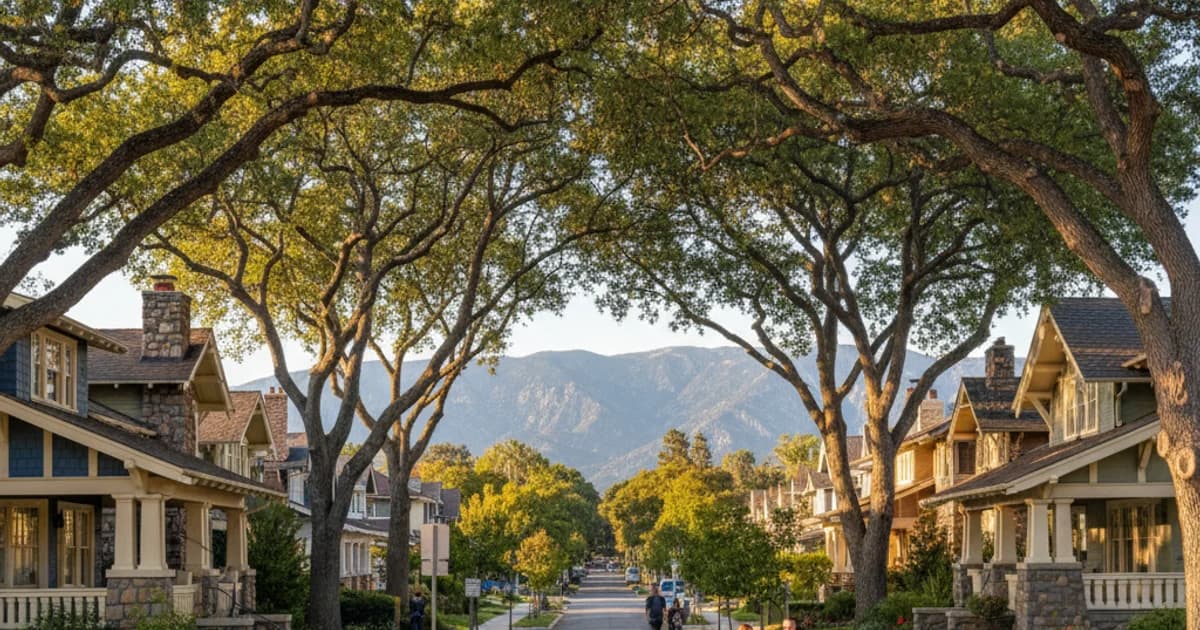
Pasadena is one of those rare Los Angeles-area cities that feels like its own world. Sitting at the base of the San Gabriel Mountains, about 11 miles northeast of Downtown LA, the Crown City blends small-town walkability with serious cultural institutions, a thriving food scene, and housing options that range from 1920s Craftsman bungalows to modern hillside estates. If you are weighing a move to Pasadena, this guide covers the real numbers and the neighborhood-level details that most relocation articles skip.
In This Guide
Pasadena Neighborhoods: Where to Live
Pasadena has over two dozen distinct neighborhoods, each with its own character and price range. Here are the areas that come up most often when buyers and renters ask me where to focus their search.
Old Town Pasadena
Old Town is the vibrant commercial heart of Pasadena, centered around Colorado Boulevard between Pasadena Avenue and Arroyo Parkway. Historic brick buildings house restaurants, boutiques, and entertainment venues. Living here means walking to everything, with easy access to the Memorial Park and Del Mar Metro stations. Most housing stock is condos and lofts above retail, with some townhome developments. Ideal for young professionals and anyone who prioritizes walkability over yard space.
Bungalow Heaven
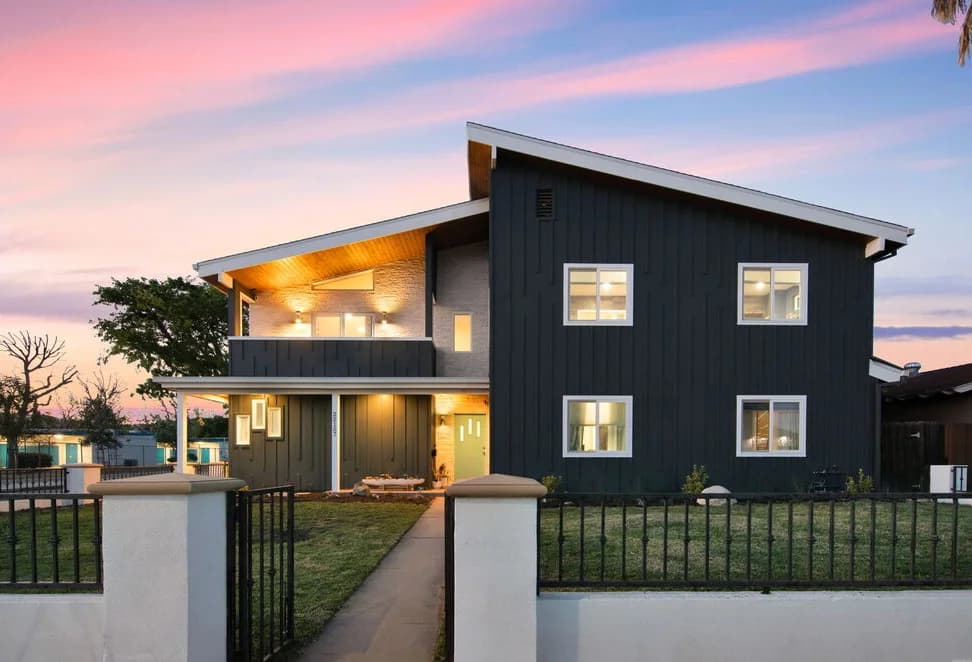
Bungalow Heaven is Pasadena's first Landmark District, created in 1989 and listed on the National Register of Historic Places. The neighborhood contains over 800 homes, most of them Craftsman and bungalow-style builds from the early 1900s that have been thoughtfully restored. Tree-lined streets, active neighborhood association events, and an annual home tour make this one of the most community-oriented pockets in the city. The American Planning Association has named it one of the "10 Great Neighborhoods in America."
Madison Heights
Madison Heights sits in central Pasadena between California Boulevard and the South Lake shopping district, bordered by Lake Avenue. The neighborhood features tree-lined avenues with a mix of beautiful early 20th-century residences and luxury estates. Its central positioning puts you within walking distance of both Old Town and the South Lake Avenue retail corridor. Home prices here range from around $900,000 for smaller properties to well over $2 million for the larger estates.
San Rafael Hills
San Rafael is a hillside neighborhood in southwest Pasadena known for elevated lots with views of the San Gabriel Mountains and the city below. Developed in the 1940s when Pasadena's housing shortage pushed construction into the hills, homes here tend to be larger and pricier than the flatlands. Expect limited walkability but significant privacy and scenery. Properties regularly trade above $2 million, with view lots pushing well past $3 million.
Northwest Pasadena
Northwest Pasadena has emerged as one of the faster-growing areas in the city, with median prices around $1.4 million and year-over-year appreciation of approximately 5.6% as of mid-2025. The neighborhood offers larger lots and more modern construction than many of Pasadena's historic districts. Families are drawn here for the relative space and the proximity to the Rose Bowl and Arroyo Seco area.
East Pasadena
East Pasadena stretches toward the foothills and borders Arcadia and Sierra Madre. The area has a more suburban character with quieter streets and proximity to Eaton Canyon, one of the most popular hiking destinations in the San Gabriel Valley. The Allen and Sierra Madre Villa Metro stations provide rail access. Homes here tend to be slightly more affordable than central Pasadena, attracting buyers who want mountain access without the hillside price premium.
South Pasadena (Adjacent City)
South Pasadena is technically its own city, not a Pasadena neighborhood, but it borders Pasadena to the south and shares many of the same amenities. Its biggest draw is the South Pasadena Unified School District, which ranks significantly higher than Pasadena Unified. Home prices reflect that school premium: median prices for condos and townhomes start around $975,000, while single-family homes in the Mission District trade between $1.5 million and $2 million or more.
Not sure which Pasadena neighborhood is right for you? I can walk you through the trade-offs between Old Town walkability, Bungalow Heaven charm, and San Rafael Hills privacy.
Home Prices by the Numbers
The Pasadena housing market is highly localized. City-wide medians mask enormous variation between neighborhoods, property types, and lot sizes. Here is what the data shows as of early 2026.
Condos and townhomes offer the most accessible entry point, starting around $600,000 for smaller units and reaching $800,000 to $1 million for updated two-bedroom properties. Single-family Craftsman homes in Bungalow Heaven and Madison Heights typically trade between $1.1 million and $2 million depending on size and condition. Hillside properties in San Rafael can exceed $3 million. Northwest Pasadena has posted the strongest recent appreciation at 5.6% year-over-year growth.
Rental Market Overview
Pasadena's rental market reflects the city's desirability and its proximity to major employers. Expect rents well above the national average across all unit sizes.
Rents near Old Town and the Metro stations command a premium for walkability and transit access. Units in east Pasadena and near the Altadena border tend to be slightly more affordable. If you are relocating for work at JPL or Caltech, many employees rent in adjacent communities like Altadena, Alhambra, or Monrovia for lower rents while staying within a short commute.
Ready to Make the Move? Search Pasadena Homes
Browse active listings across Pasadena and the surrounding communities. Updated daily with new inventory.
Schools and Education
Pasadena Unified School District (PUSD)
PUSD serves approximately 13,854 students across 23 schools for the 2025-26 school year. The district earns an average testing ranking of 6 out of 10 statewide, with reading proficiency at 45% and math proficiency at 34%. The graduation rate stands at 85%. Per-student spending is approximately $18,252.
Notable public schools include Blair High School (6-12), John Muir High School, and Pasadena High School, all of which have received U.S. News and World Report silver medal rankings among the country's top high schools. Marshall Fundamental Secondary School (6-12) is another strong option that operates as a school of choice within the district.
Top Private Schools
Pasadena is home to several nationally recognized private schools, with average tuition running $25,000 to $40,000 per year:
Polytechnic School
The first nonprofit, independent school in Southern California. Polytechnic ranks in the top 20% of all private schools in the state. Known for rigorous academics across math, science, and humanities with an emphasis on critical thinking and intellectual independence.
Westridge School
Westridge has empowered generations of young women since 1913 with a focus on challenging the status quo and developing leaders. Smaller class sizes boost academic confidence. Rated 4.4 out of 5 stars by parents on Niche.
Mayfield Senior School
An independent Catholic college-prep school known for its warm, supportive community and focus on holistic student development. Consistently ranked among the top private high schools in Pasadena.
Commute Times and Transit Access
Metro A Line (formerly Gold Line)
Pasadena has six Metro A Line stations: Fillmore, Del Mar, Memorial Park, Lake, Allen, and Sierra Madre Villa. The ride from Memorial Park station to Union Station in Downtown LA takes approximately 23 to 24 minutes, with trains running every 15 minutes. A one-way fare is $1.75. At Union Station, you can transfer to the B Line (Red) for Hollywood and North Hollywood, the D Line (Purple) for Koreatown, or the LAX FlyAway bus for airport access.
Driving Commute Times
| Destination | Distance | Off-Peak | Rush Hour |
|---|---|---|---|
| Downtown LA (DTLA) | 11 miles | 15-20 min | 35-50 min |
| Burbank (studios) | 14 miles | 15-20 min | 30-45 min |
| JPL (La Canada Flintridge) | 6 miles | 10-12 min | 15-20 min |
| Caltech campus | 2-4 miles | 5-10 min | 10-15 min |
| Glendale | 8 miles | 12-15 min | 25-35 min |
| Hollywood | 15 miles | 20-25 min | 40-60 min |
| LAX Airport | 30 miles | 35-45 min | 60-90 min |
The 110 Freeway (Arroyo Seco Parkway) is the primary route to Downtown LA and is one of the most congested freeways during peak hours. The 210 Freeway provides east-west connectivity to Glendale, Burbank, and the Inland Empire. Many Pasadena commuters rely on the Metro A Line for DTLA trips, particularly those working in the Financial District or near Union Station.
Commute time matters when choosing a neighborhood. I can help you find Pasadena homes near Metro stations or with the best freeway access for your workplace.
Cost of Living in Pasadena
Pasadena's cost of living is approximately 43% above the national average, driven primarily by housing. Monthly costs average around $3,529 for a single person and $7,772 for a family of four. Compared to the city of Los Angeles, Pasadena runs about 5% higher overall, with housing costs roughly 28% above the national median.
Where Pasadena saves you money: if you live near Old Town or a Metro station, you may not need a second car. Walkable dining and entertainment reduces the "going out" cost that many LA residents spend in gas and parking. The city also has its own municipal utility (Pasadena Water and Power), which often runs cheaper than Southern California Edison rates.
Weather and Climate
Pasadena enjoys a Mediterranean climate classified as Csa on the Koppen scale. That translates to warm, dry summers and mild winters with most rainfall concentrated between November and March.
Pasadena receives slightly more rainfall than central Los Angeles because of its position at the base of the San Gabriel Mountains. Snow is extremely rare, though it has happened (the last notable snowfall was in 1949). Summer evenings cool down more than coastal areas, making outdoor dining on Colorado Boulevard comfortable year-round. If you are relocating from a humid climate, you will appreciate how quickly laundry dries here.
What's Your Pasadena Home Worth?
Thinking about selling before your next move? Get a free, data-driven estimate of your current property's market value.
Get Your Free EstimateLifestyle, Culture, and Dining
Pasadena punches well above its weight as a cultural destination. The city offers world-class museums, a nationally recognized food scene, and outdoor access that most LA neighborhoods cannot match.
Arts and Museums
The Norton Simon Museum houses an impressive collection including works by Van Gogh, Rembrandt, and Monet. The Huntington Library, Art Museum, and Botanical Gardens spans 120 acres with rare manuscripts, themed gardens, and rotating exhibitions. The Pasadena Playhouse, designated the State Theater of California, has staged productions since 1917. The Pasadena Museum of California Art and the Armory Center for the Arts round out the cultural lineup.
Outdoor Recreation
The Rose Bowl Loop is a 3.3-mile walking and jogging path around the iconic stadium, popular with residents every morning. Eaton Canyon offers hiking trails, wildlife viewing, and a scenic waterfall hike suitable for families. The Arroyo Seco trail system connects to larger San Gabriel Mountain routes for more ambitious hikers. Brookside Park and the Rose Bowl Aquatics Center provide swimming, tennis, and picnic facilities.
Food and Farmers Markets
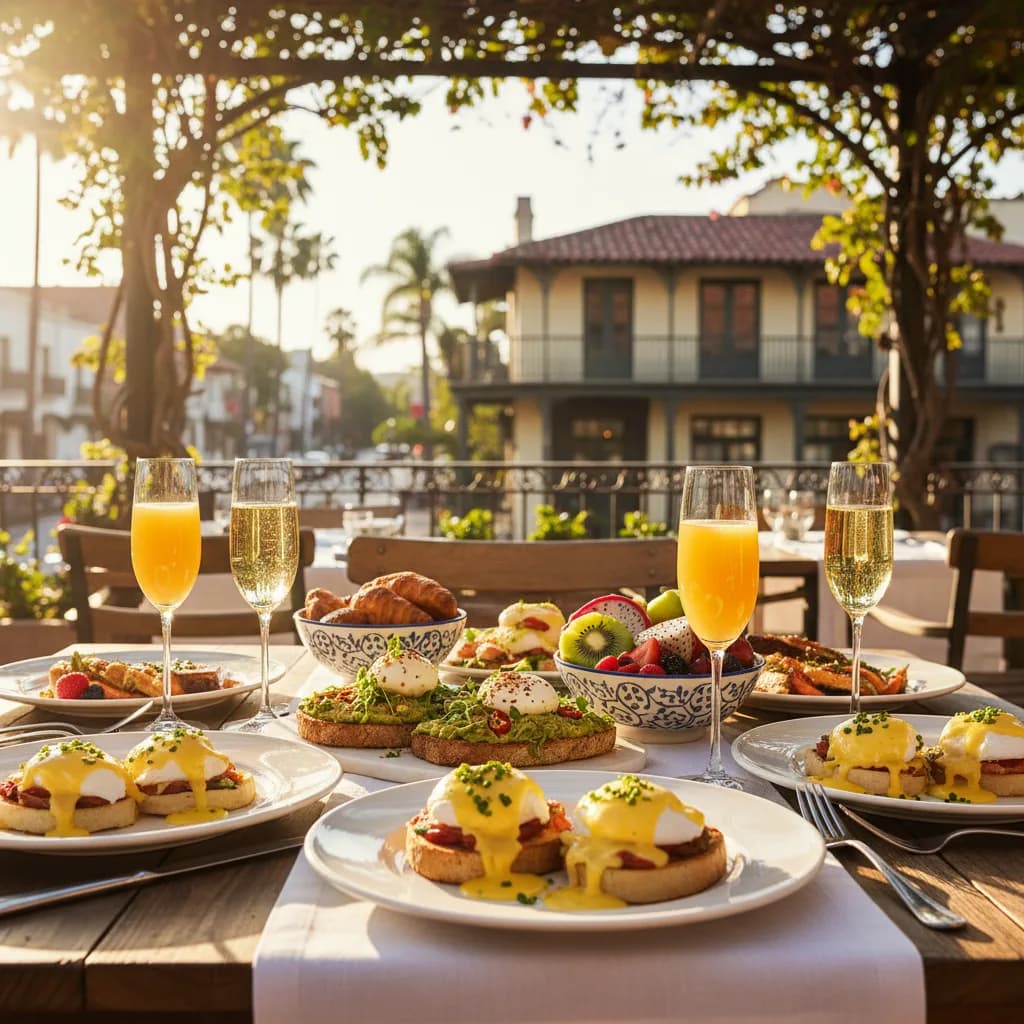
Old Town Pasadena and South Lake Avenue host hundreds of restaurants spanning virtually every cuisine. The Rose Bowl Flea Market draws around 20,000 visitors on the second Sunday of each month, with 2,500 vendor kiosks selling art, vintage clothing, and antiques. The Pasadena Certified Farmers Market runs twice weekly: Tuesdays at Villa Parke Center and Saturdays at Victory Park, where the larger Saturday market features 60 local vendors.
Annual Events
The Tournament of Roses Parade on New Year's Day is the city's most famous event, drawing over 700,000 spectators along Colorado Boulevard. The Rose Bowl Game follows each January 1st. Throughout the year, residents enjoy the Pasadena Chalk Festival, the Doo Dah Parade (the irreverent counter to the Rose Parade), ArtNight Pasadena, and the Bungalow Heaven home tour.
Major Employers in Pasadena
Pasadena's economy is anchored by technology, education, healthcare, and engineering. The city is not a bedroom community; many residents both live and work here.
Caltech and JPL
The California Institute of Technology (Caltech) manages NASA's Jet Propulsion Laboratory under a federal contract. JPL alone operates as a $2-billion-per-year facility leading robotic space exploration. Together, Caltech and JPL employ approximately 8,000 people, with about 5,500 based at the JPL campus in adjacent La Canada Flintridge. Note: JPL has undergone workforce restructuring since 2024, with multiple rounds of layoffs reducing headcount by roughly 1,500 positions.
Healthcare
Huntington Memorial Hospital and Kaiser Permanente are among the city's largest employers outside the Caltech ecosystem. Huntington Medical Research Institute contributes to the city's healthcare and biotech sector.
Corporate and Creative
Pasadena is the headquarters for Parsons Corporation (engineering and defense), Western Asset Management (fixed income), Tetra Tech (environmental consulting), East West Bank, and Singpoli Capital. ArtCenter College of Design operates its South Campus in Pasadena and draws creative professionals and students from around the world.
What's Your Pasadena Home Worth?
Between Caltech, JPL, and the city's world-class cultural institutions, Pasadena continues to attract high-earning buyers. See what your property could sell for in today's market.
Get Your Free Home ValuationParking and Traffic Realities
Parking in Pasadena is manageable once you understand the rules, but newcomers frequently get caught by the overnight restrictions.
Overnight ban: Parking is not permitted on city streets between 2:00 AM and 6:00 AM unless signs state otherwise. This is the single biggest surprise for new residents. If your home does not include a garage or driveway, you will need to secure off-street parking.
72-hour limit: No vehicle may remain parked in the same spot on a public street for more than 72 consecutive hours.
Residential permits: If you live in an established parking district, you are eligible for up to three residential parking permits. You will need valid vehicle registration matching your residential address to apply.
Metered zones: Over 1,200 parking meters are active across five areas: Old Pasadena, Civic Center, South Lake, Playhouse District, and West Gateway. Old Pasadena and West Gateway enforce meters seven days a week. Temporary daytime parking exemptions are available at kiosks throughout the city, valid from 6:00 AM to 11:59 PM.
Traffic patterns: The 110 Freeway bottlenecks are worst between 7:30 and 9:30 AM heading south and between 4:30 and 7:00 PM heading north. Colorado Boulevard through Old Town and Fair Oaks Avenue are the busiest surface streets. Rose Bowl event days (football games, flea market, concerts) create significant congestion in the Arroyo Seco area.
Explore the Pasadena Area Market
See what is available right now across Pasadena, South Pasadena, Altadena, San Marino, and Alhambra.
Frequently Asked Questions About Moving to Pasadena
What is the median home price in Pasadena CA in 2026?
The median home price in Pasadena is approximately $1.3 million as of early 2026, though prices vary significantly by neighborhood. Condos and townhomes start around $600K to $800K, while single-family homes in neighborhoods like Madison Heights range from $900K to $2M. Hillside properties in San Rafael can exceed $2.5M. Northwest Pasadena has seen median prices around $1.4M with 5.6% year-over-year growth.
How much does it cost to rent an apartment in Pasadena?
Average rents in Pasadena run approximately $2,300 to $2,950 per month for a one-bedroom apartment and $3,100 to $3,600 for a two-bedroom unit. Studio apartments start around $1,800. Rents are significantly higher than the national average, reflecting Pasadena's walkable downtown, strong transit access, and proximity to major employers like Caltech and JPL.
How long is the commute from Pasadena to Downtown LA?
Driving from Pasadena to Downtown LA covers about 11 miles and takes 15 to 20 minutes off-peak. Rush hour can push that to 35 to 50 minutes via the 110 Freeway. The Metro A Line (formerly Gold Line) runs from Pasadena to Union Station in approximately 23 minutes, with trains departing every 15 minutes. A one-way Metro fare is $1.75.
What are the best neighborhoods in Pasadena for families?
The best family neighborhoods include Bungalow Heaven for its tree-lined streets and historic Craftsman homes, Madison Heights for its central location near schools and shops, and Northwest Pasadena for larger lots and newer construction. Families prioritizing top-rated public schools often choose adjacent South Pasadena or San Marino for their higher-ranking school districts.
How are the public schools in Pasadena?
Pasadena Unified School District serves about 13,854 students across 23 schools with an average state testing ranking of 6 out of 10. Blair High School and Marshall Secondary School have earned U.S. News silver medals. The district has an 85% graduation rate. For private options, Polytechnic School, Westridge School, and Mayfield Senior School are among the highest-rated in Southern California, with tuition averaging $25,000 to $40,000 per year.
Is Pasadena expensive to live in?
Pasadena's cost of living runs approximately 43% above the national average and about 5% higher than the city of Los Angeles. Monthly costs average around $3,529 for a single person and $7,772 for a family of four. Housing is the primary driver. However, residents gain walkable dining and entertainment, strong transit access, and Pasadena Water and Power rates that often beat Southern California Edison.
What is the weather like in Pasadena year-round?
Pasadena enjoys a Mediterranean climate with warm, dry summers (highs of 85 to 90 degrees) and mild winters (lows around 45 to 50 degrees). Annual rainfall averages 15 to 20 inches, concentrated between November and March. Snow is extremely rare. The city gets slightly more rain than central LA due to its position near the San Gabriel Mountains, and summer evenings cool down more than coastal areas.
What are the major employers in Pasadena?
Caltech is Pasadena's largest employer with roughly 8,000 employees, including about 5,500 at NASA's Jet Propulsion Laboratory. Other major employers include Huntington Memorial Hospital, Kaiser Permanente, Parsons Corporation, ArtCenter College of Design, Western Asset Management, Tetra Tech, and East West Bank. The healthcare, technology, and education sectors drive the local economy.


Justin Borges
Team Lead, The Borges Real Estate Team
DRE #01940318
With over 13 years in Southern California real estate, Justin specializes in probate sales, trust properties, and character homes. His expertise in 1031 exchanges and historic preservation has helped hundreds of clients navigate complex real estate transactions.